Dario Move Digital physical therapy at home
- Company
- DarioHealth
- My role
- Head of Product Design
- Team
- 4 senior UX/UI designers, part of the 16-person design org I led
- Timeline
- 2022
- The challenge
- A live app that pairs a wearable sensor with a personal exercise plan had to be easy to start, easy to keep using at home, and part of one Dario experience.
- What I did
- Led the designers who improved, maintained and polished the app across its main flows — screening, therapist scheduling, sensor setup, exercise sessions and feedback — setting priorities with product and clinical teams and reviewing the work end to end.
- Outcome
- One consistent flow from the first question to the progress report a physical therapist sees — pain results as published by DarioHealth.
Starting point
Dario Move brings physical therapy for back, neck and joint pain into the home: a small biofeedback sensor, an exercise plan built by physical therapists, and coaches who follow the progress. DarioHealth offers it to employers and health plans.
When I joined, the app was already live. The work was to make every step clearer — from the first question to the last rep — and to bring it in line with the rest of the Dario products.
Led by user feedback
We gathered what users told us, set priorities with product and the clinical team, and turned it into a steady flow of improvements across the whole app. Each flow below went through that loop.
A personal plan in three minutes
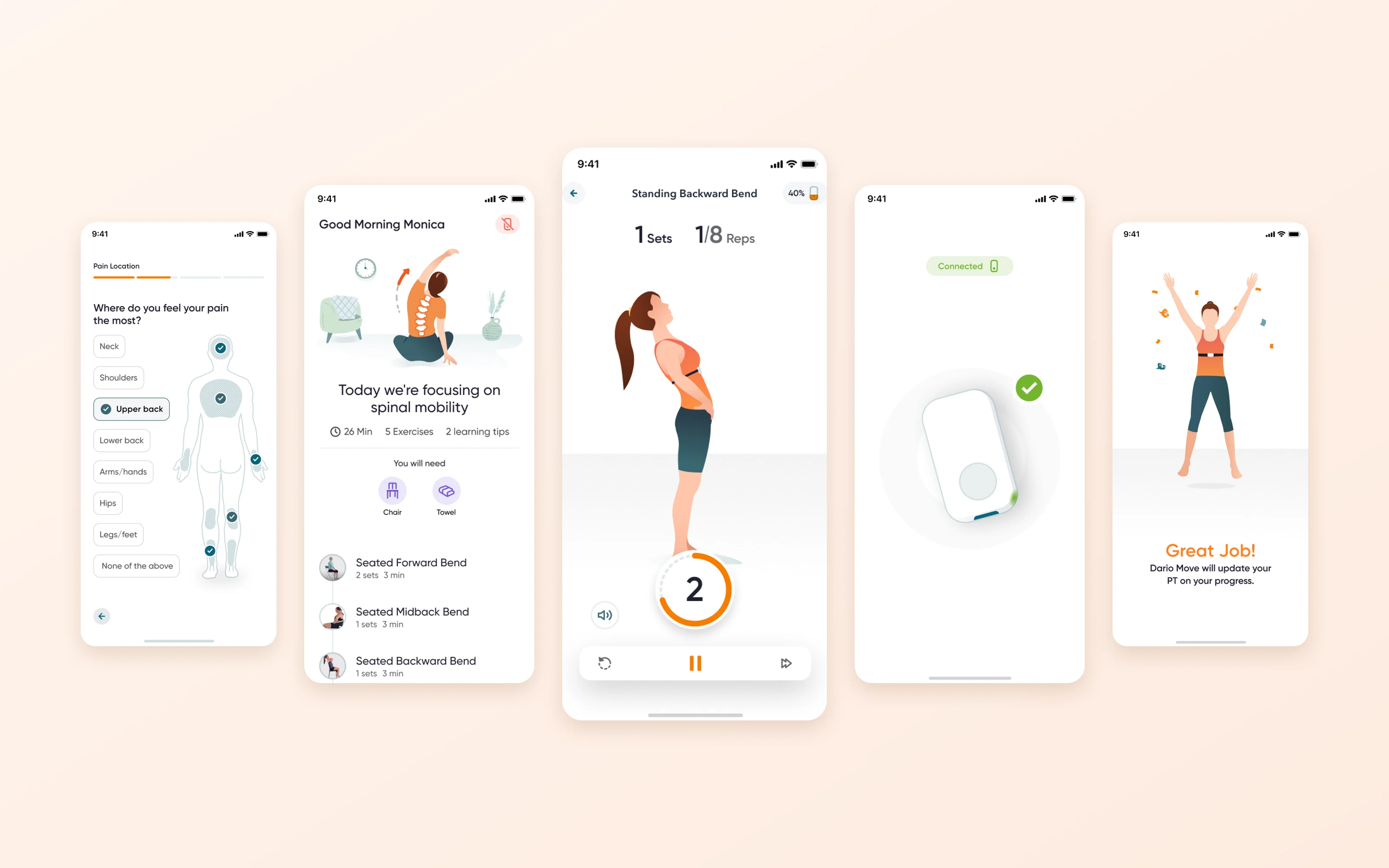
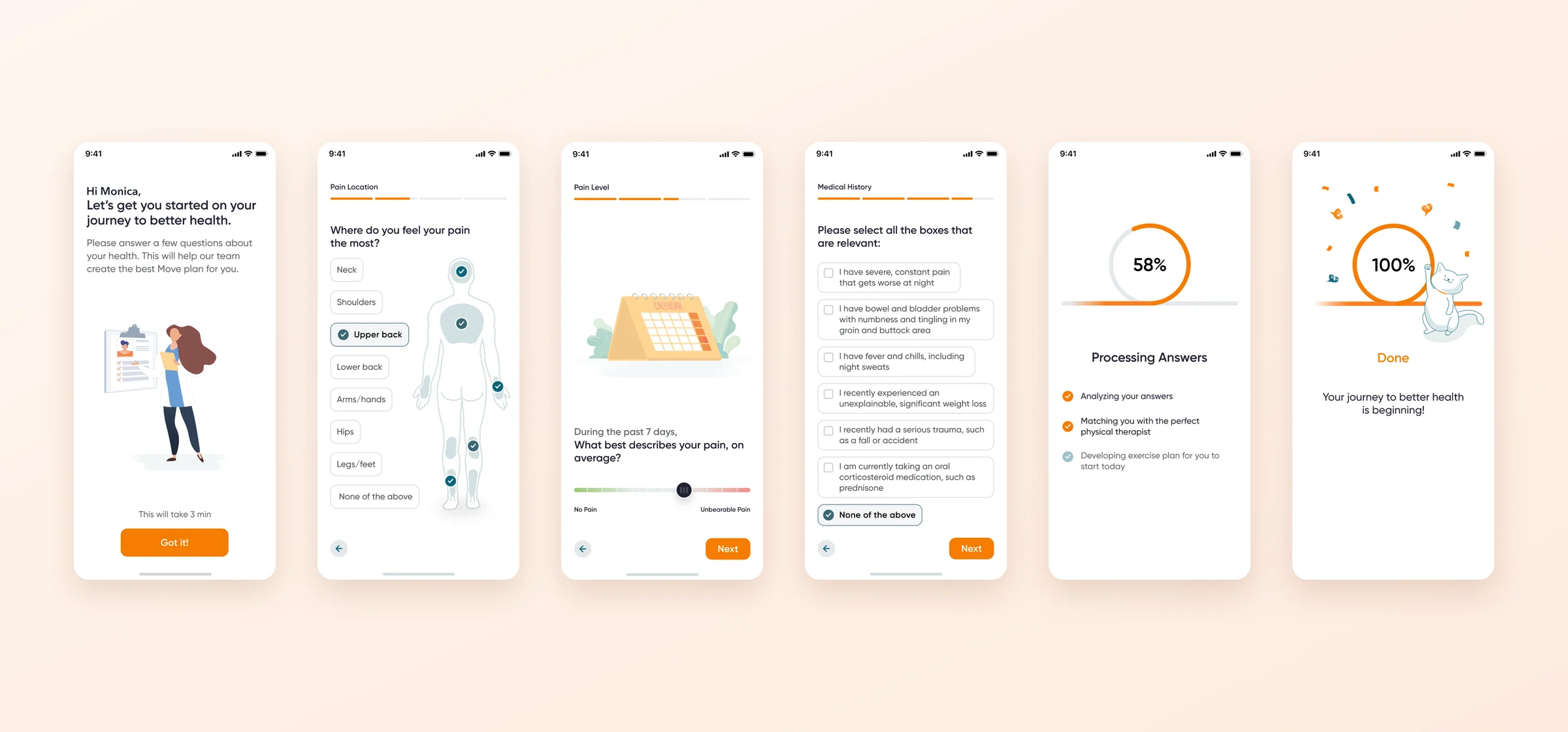
A short screening replaces a first clinic visit: where it hurts on a body map, how strong and how often, and a few medical questions that flag who needs a doctor first. The answers match the person with a physical therapist and a starting plan.
A real person from day one
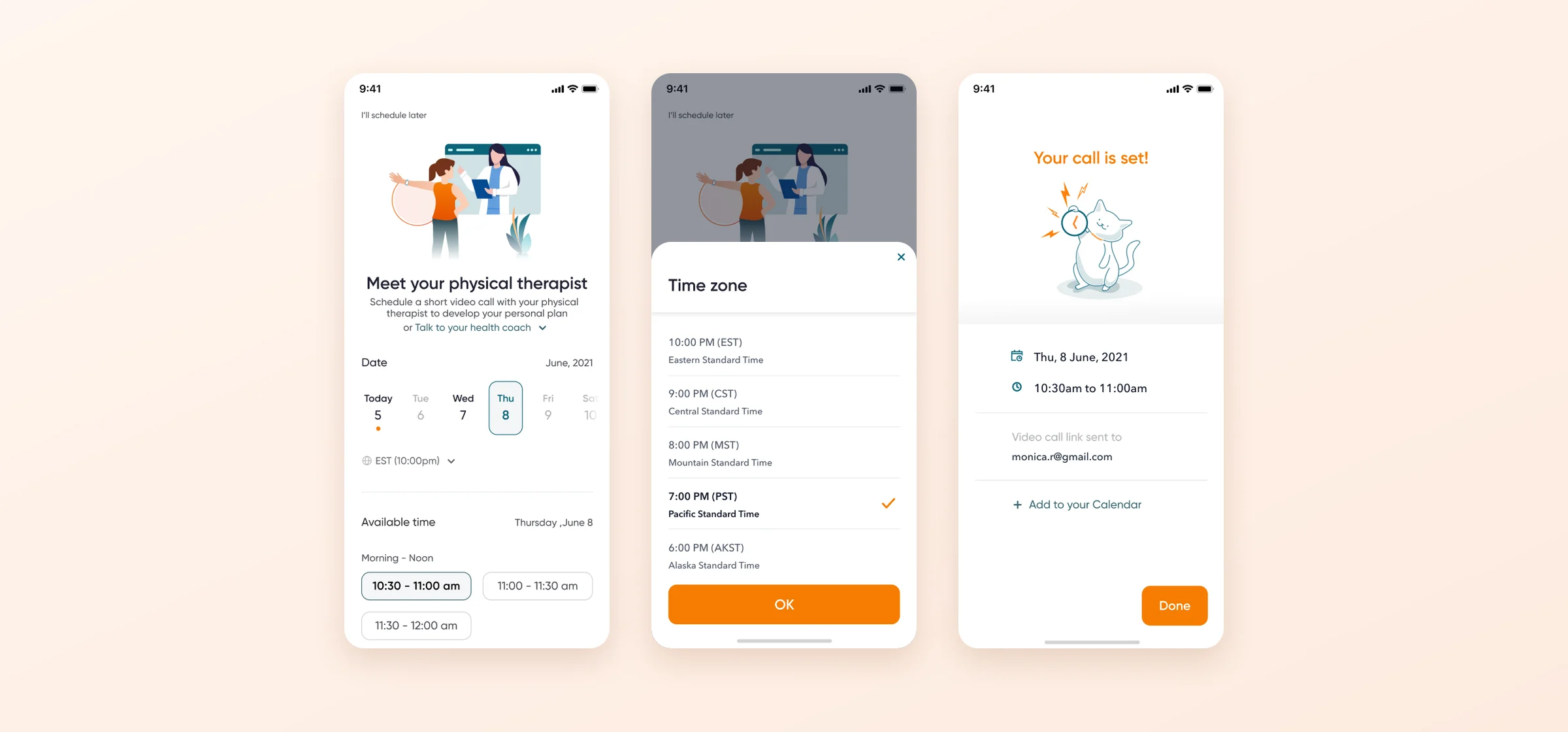
Before the first exercise, people book a short video call with their physical therapist, in their own time zone.
Sensor setup without friction
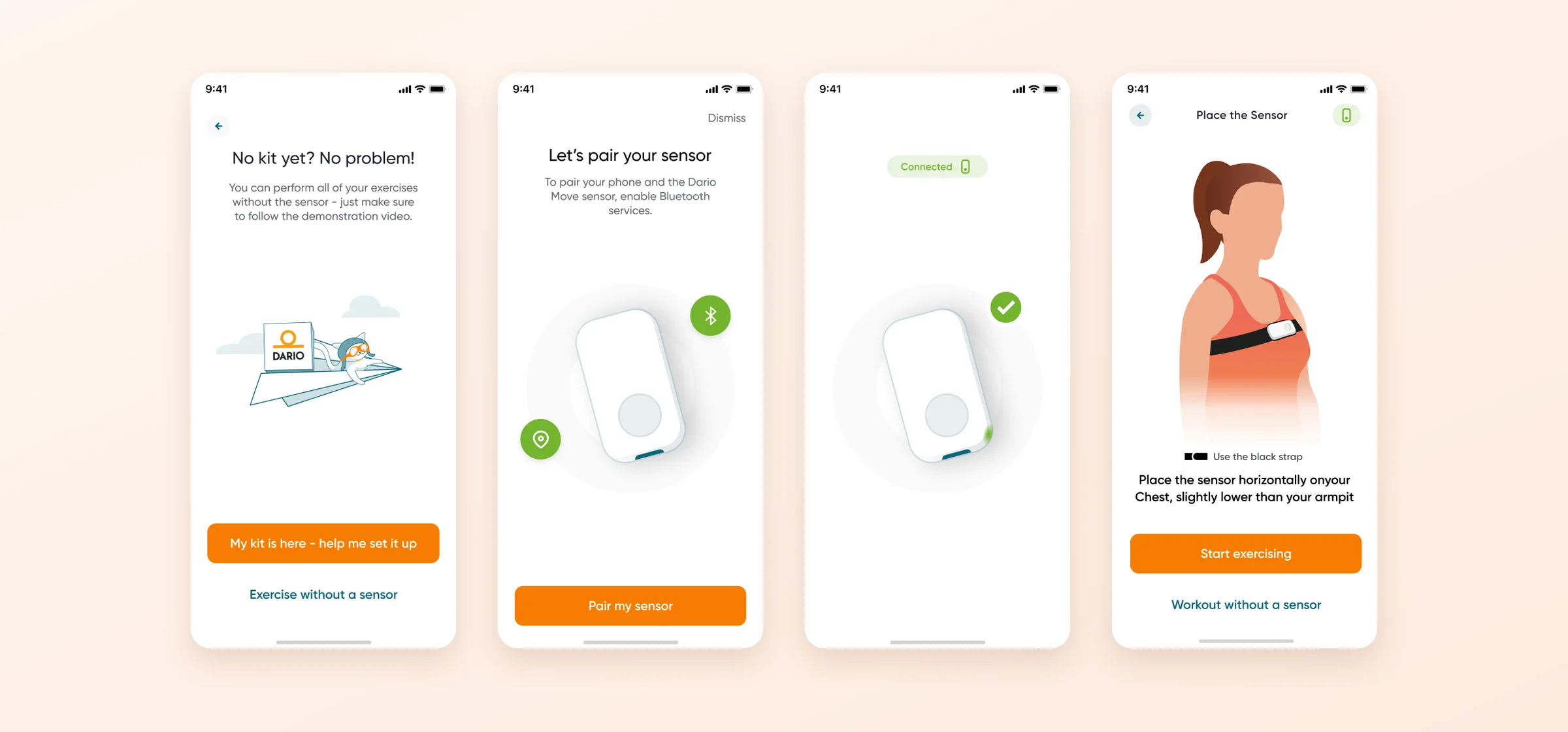
Pairing and placing the sensor take a few guided steps. If the kit hasn’t arrived yet, people can start right away and exercise without it.
The session
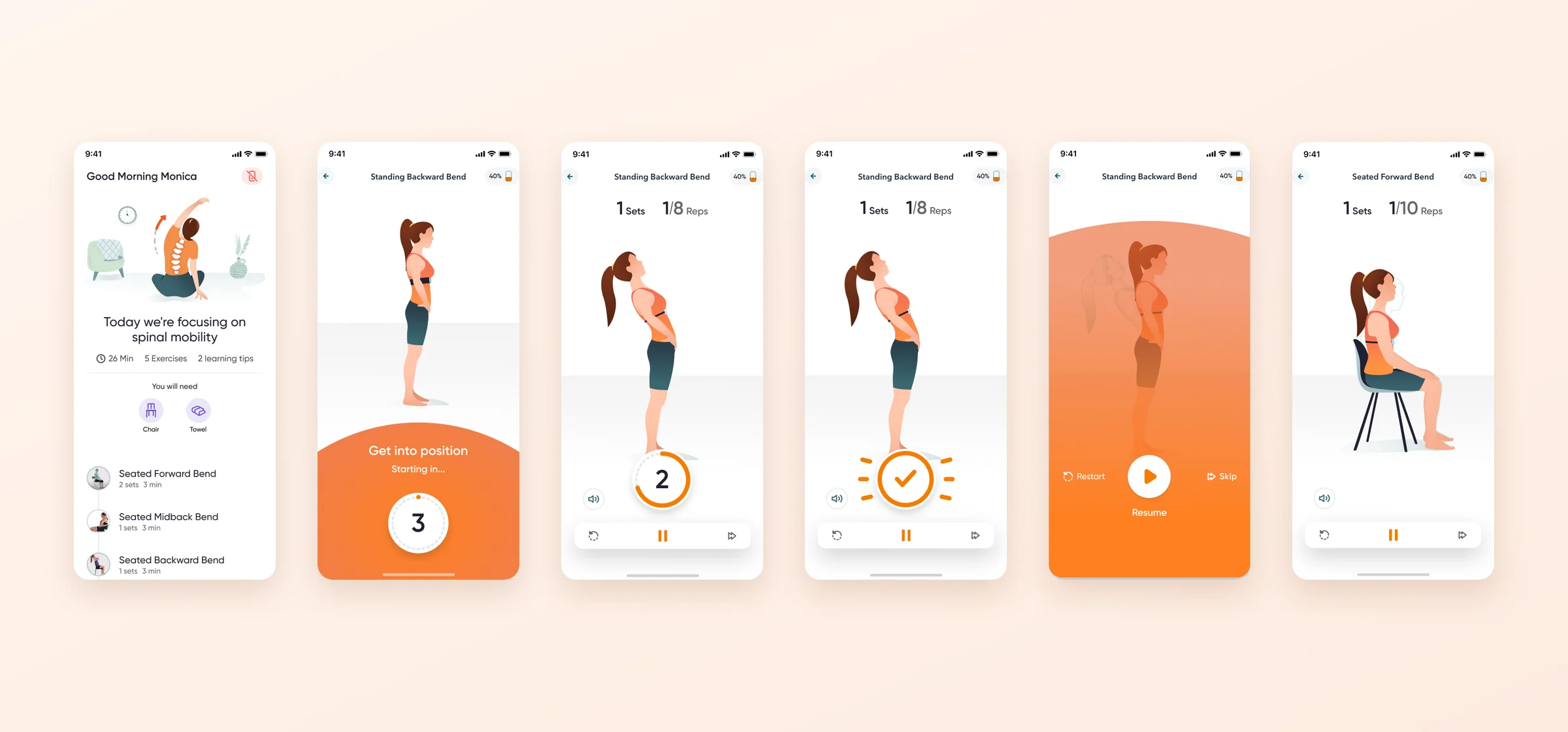
Today’s plan shows the time, the exercises and what you’ll need. During each exercise the app counts down, counts every rep and confirms it, so people can follow it at home without looking at the screen all the time.
Learning and a coach
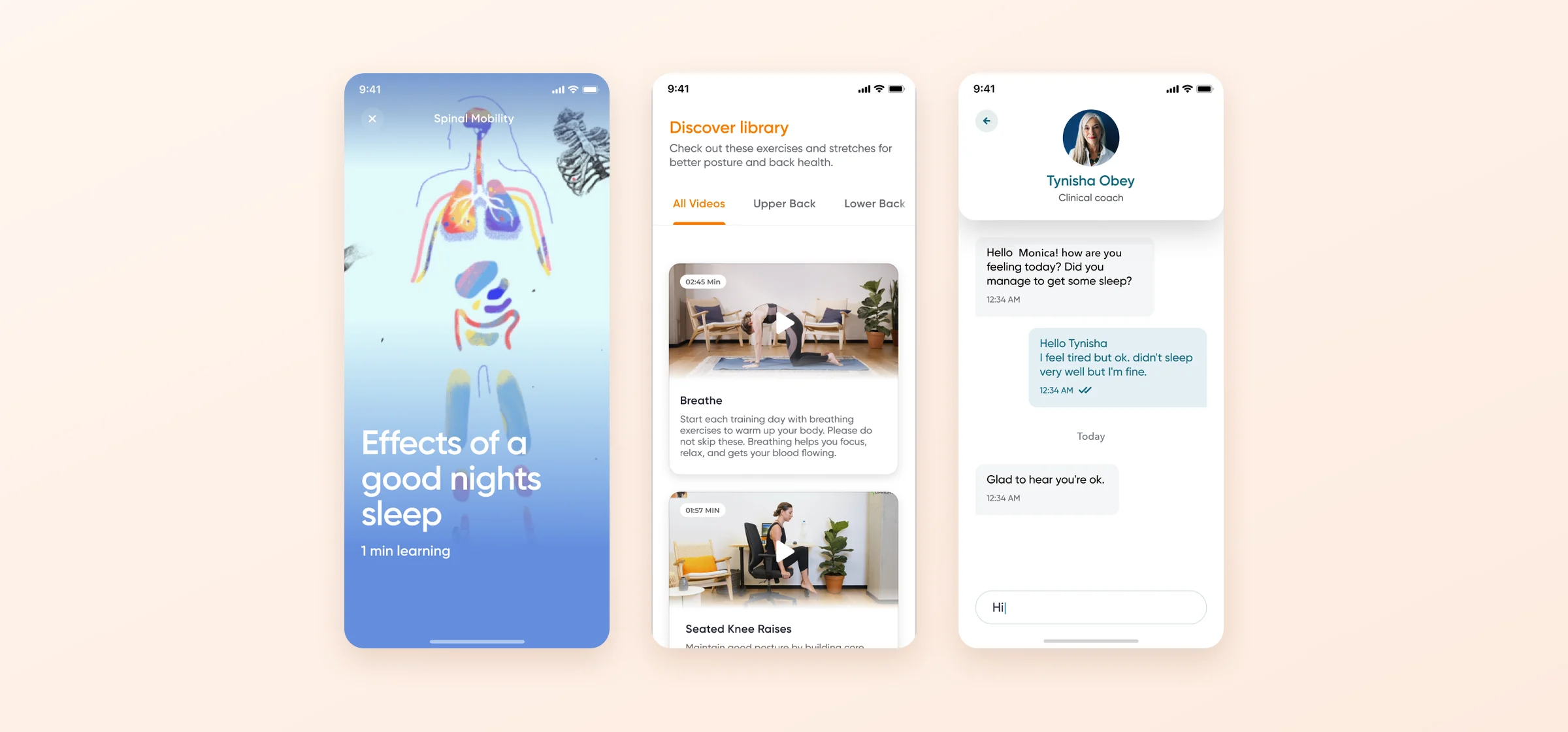
Short lessons sit between the exercises, a library holds more videos, and a clinical coach is a message away.
Closing the loop
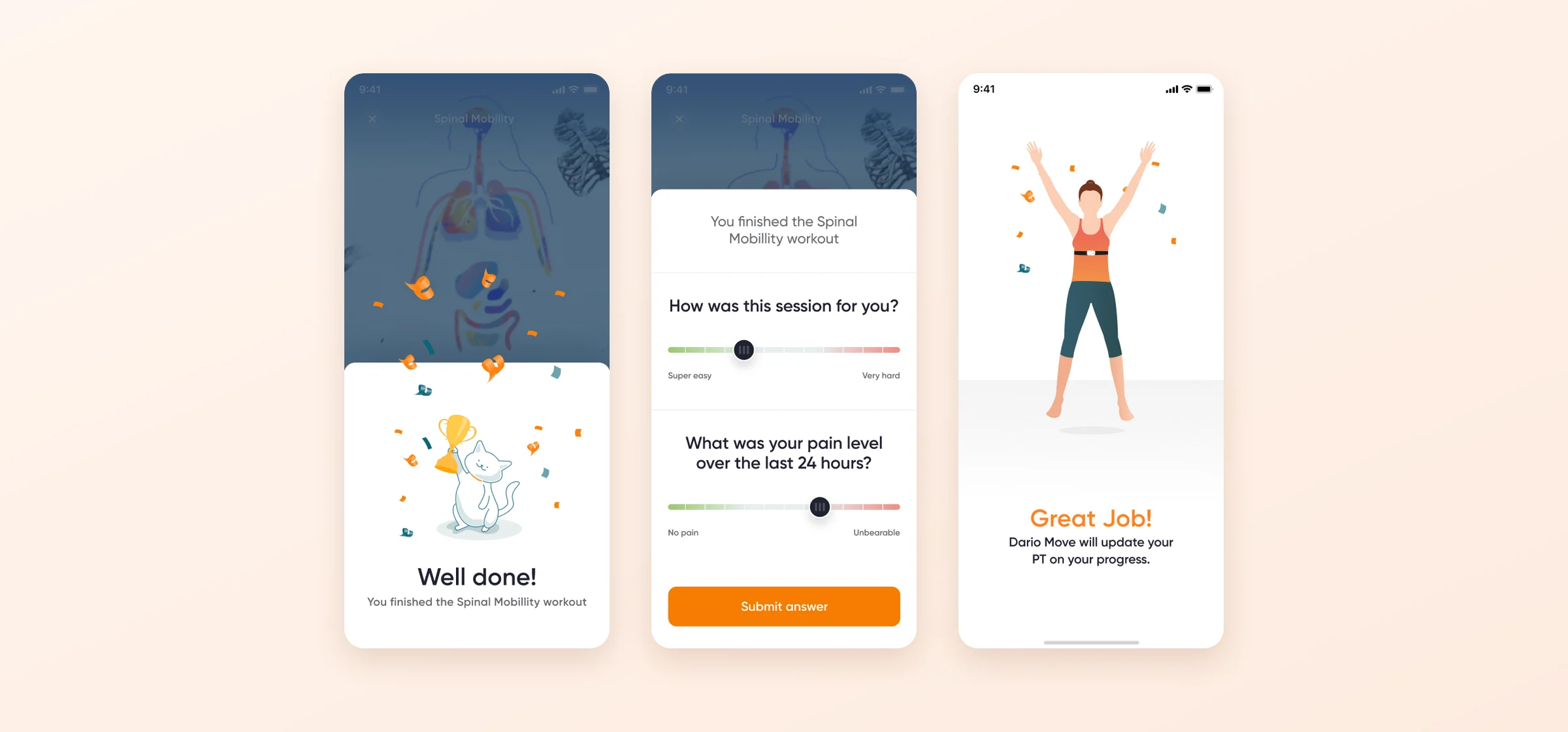
Every session ends with two quick questions — how hard it was and how much it hurt — and the answers go to the physical therapist, who adjusts the plan.
Impact
- Pain: a 50% average reduction in back pain; 60% of users reached a clinically important reduction within 4 weeks, and 76% had less pain after 8 weeks — from a peer-reviewed study of 981 users published by DarioHealth.
- Scope: the live app improved across its main flows — screening, therapist scheduling, sensor setup, exercise sessions and feedback.
- One Dario: Dario Move brought in line with the rest of the Dario products.
What I’d do differently now
I would test the sensor setup in people’s homes much earlier — unboxing, pairing and placing the strap. That is where someone can give up before their first session, and no screen later in the app can win them back.
Hiring a design leader?
Let’s talk about how I can help your team.